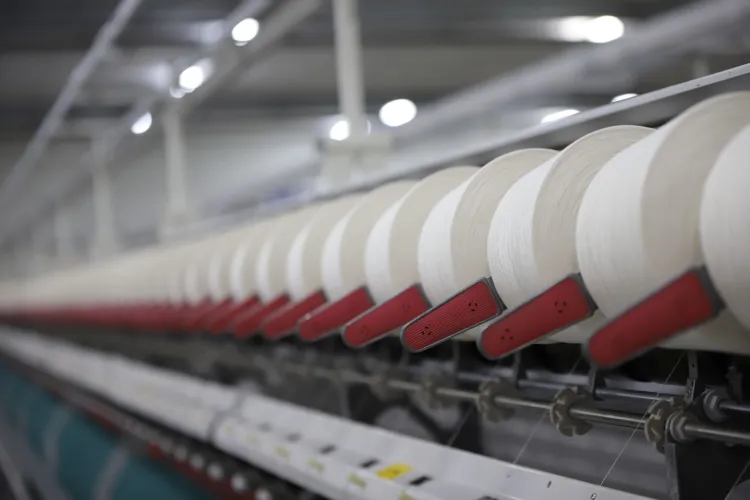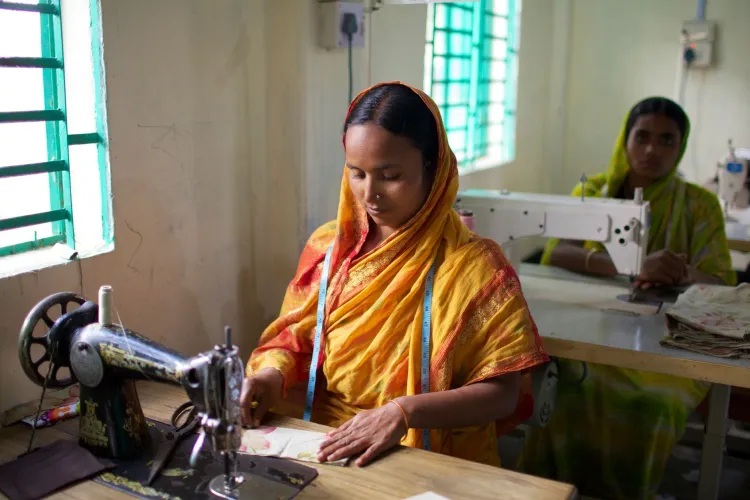
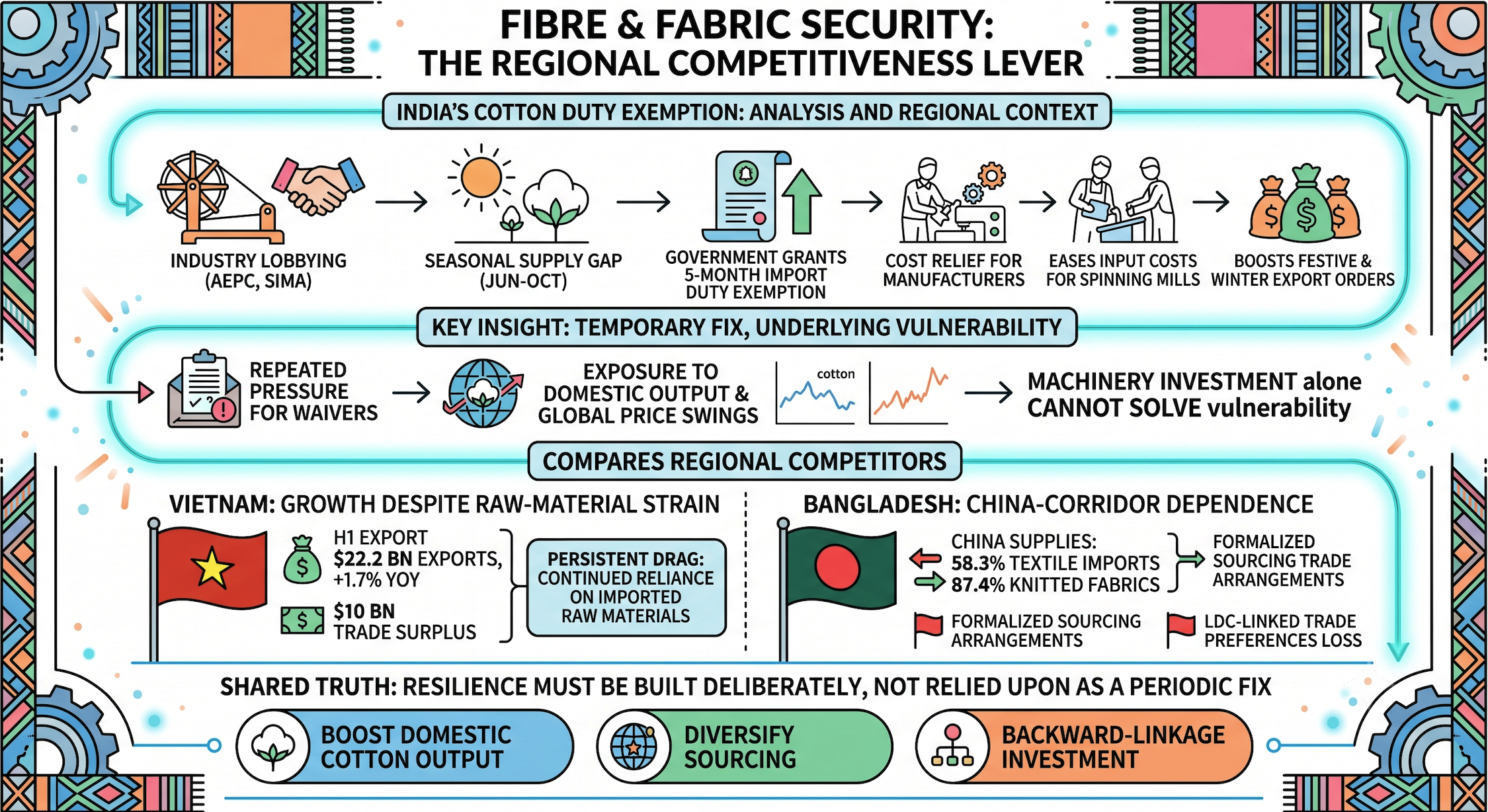
India's textile and apparel sector has won a long-standing demand: the government has granted a five-month exemption on import duty for cotton, running from June to October this year. The relief follows sustained lobbying by industry bodies including AEPC and SIMA, who argued that domestic fibre availability was becoming a bottleneck for spinning mills and, further down the chain, for garment exporters.
Analysis: for Indian manufacturers, this is a cost-relief measure rather than a structural fix. A time-bound exemption smooths out a seasonal supply gap and should ease input costs for spinners and knitters through the peak production months ahead of festive and winter export orders. But the fact that industry had to push repeatedly for a temporary waiver underlines how exposed Indian mills remain to swings in domestic cotton output and global price movements — a vulnerability that machinery investment and capacity planning alone cannot solve.
The timing is notable because it comes as regional competitors post similar signals of raw-material strain. Vietnam's textile and garment exports reached an estimated US$22.2 billion in the first half of the year, up 1.7% year-on-year and generating a trade surplus of nearly US$10 billion — even as the industry's own trade body flagged "continued reliance on imported raw materials" as a persistent drag amid weak global demand and intense price competition. Growth is happening, in other words, despite the input dependency, not because it has been solved.
Bangladesh offers a starker version of the same story. China supplied 58.3% of Bangladesh's textile imports in the first quarter of 2026, and a striking 87.4% of its knitted fabrics — a dominance that is now being formalised through deeper China-Bangladesh sourcing arrangements. It is an efficient supply line in the short term, but it leaves Bangladesh's apparel exporters heavily tethered to a single external source for core inputs, at precisely the moment the country is also bracing for the loss of LDC-linked trade preferences.
Read together, these developments point to a shared regional truth: fibre and fabric security is emerging as a competitiveness lever every bit as important as labour cost or machinery efficiency. For Indian exporters, the cotton duty waiver is a useful short-term cushion, but the underlying lesson from Vietnam's import dependence and Bangladesh's China-corridor concentration is that raw-material resilience needs to be built deliberately — through domestic cotton output, diversified sourcing, and backward-linkage investment — rather than relied upon as a periodic policy fix.